Silent Winnings: The Tax Question Bengali-American Bettors Keep Off the Family Group Chat
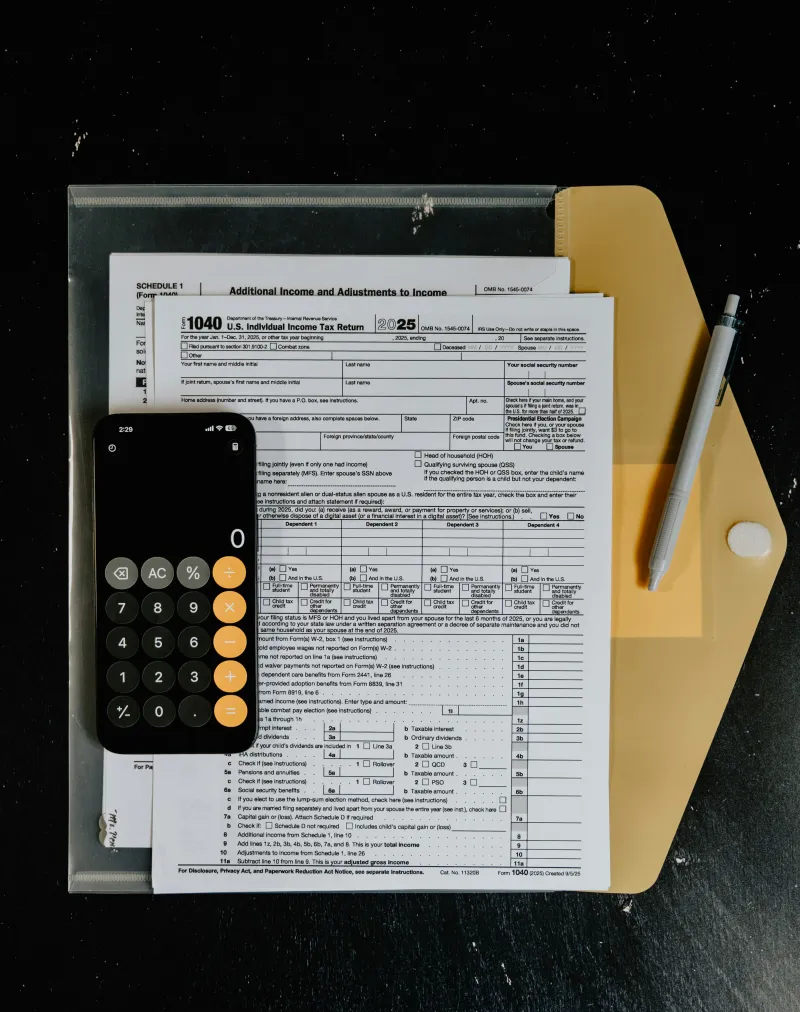
Photo: tax forms calculator late night desk paperwork, via images.unsplash.com
There's a specific kind of quiet that falls over a Telegram group when someone asks how much you took off the BPL final. Not silence exactly — more like a collective decision to talk about the pitch instead. In Bengali-American households, cricket betting winnings exist in a strange double shadow: hidden from family members who'd either disapprove or ask for a loan, and — more dangerously — sometimes hidden from the IRS.
We wanted to know what actually happens when those two silences collide. So we talked to the rules, read the IRS guidance, and asked a tax attorney friend to walk us through the scenarios nobody discusses at the watch party. What follows isn't a lecture and it isn't a loophole guide. It's the conversation the community keeps postponing.
The Law Doesn't Care Where the Money Came From
Start with the part that surprises people most: whether your sportsbook is licensed in New Jersey or registered on some .ag domain in Curacao makes no difference to your tax obligation. Under US federal law, gambling winnings are taxable income — all gambling winnings, from all sources, at all amounts.
"People assume offshore means off the books," says Maria Delgado, a tax attorney in New Jersey who works with immigrant communities. "It doesn't. An offshore book is unregulated, which creates compliance problems for the operator and risk for the bettor. But the income itself was always reportable."
That applies whether you won $40 on a BPL match or $4,000 across a season. Technically, even small wins are income. In practice, the enforcement line sits around $600 for most reporting requirements from domestic books — but that threshold governs what the book must report, not what you must. The obligation on the bettor side has no floor.
The Taka Problem
Here's where it gets genuinely messy for Bengali-American bettors. A chunk of the community plays on accounts funded and sometimes settled in Taka — through family in Dhaka, through informal networks, through books that quote odds in BDT. So what's your taxable income when the winnings never touched a US bank account?
"The income is still yours," Delgado explains. "If you control the funds, even if they're sitting in a bKash wallet in your cousin's name in Dhaka, you may have a constructive receipt argument against you. And if you repatriate the money — send it back through an informal channel, have someone hand you cash, convert it through crypto — every one of those steps is a separate compliance event."
That last part deserves emphasis. The moment you convert USDT to dollars on an exchange, you've created a taxable crypto disposal and potentially a paper trail. The moment you receive cash from a hawala-style settlement, you've received untaxed income through an untraceable channel — which is the worst of both worlds: taxable, and invisible to anyone who might otherwise document it.
Why Crypto Cash-Outs Feel Safer Than They Are
The community's favorite exit route — win on an offshore book, cash out to a crypto wallet, sell the coins — has an aura of invisibility. That aura is aging badly.
Centralized exchanges now require KYC on nearly every US-usable platform. Chain analysis tools that were once the province of federal agencies are standard equipment at accounting firms. And the IRS has spent years building its information-matching apparatus around exactly these conversion points. A 1099-DA on crypto dispositions has changed the landscape further.
"The five-year lookback is real," Delgado says. "Audits of people with modest reported income and substantial unexplained deposits happen more often than anyone thinks. And the penalty structure — accuracy-related penalties, potential fraud penalties — compounds fast."
The Family Silence That Makes It Worse
The cultural layer is what makes this community's situation unique. In many Bengali-American households, gambling sits somewhere between embarrassing and forbidden — a topic that shares space with the theological concerns many families hold. So bettors compartmentalize. The winnings can't be explained, so they're not deposited, not declared, not discussed.
This creates a specific vulnerability: no documentation, no consistent story, and a family that can't help you if the IRS comes calling because the family doesn't know the income exists.
The honest move — and we say this as a site that covers this community's betting life closely — is boring. Report the income. Use Form W-2G where applicable, Schedule 1 for other winnings, and track your basis in Taka conversions using the exchange rate on the date of receipt. Deduct losses up to winnings if you itemize, with records. It costs more in April and buys you something rare in this space: a position nobody can later call a lie.
The Bottom Line
Nobody at Baji999 is going to pretend the current system is fair — offshore books operate in regulatory gray zones while bettors carry the full compliance burden. That critique is legitimate. But the critique doesn't change the math, and the math says unreported winnings compound into real legal risk.
The BPL ends every February. Tax season ends every April. Maybe this year, the two calendars should meet.
This article is general information, not tax or legal advice. Consult a qualified professional about your specific situation.